
Is Sauerkraut Good for Gut Health? What the Research Says

Sauerkraut is an interesting food for gut health because it combines fermented vegetables, fibre and, when eaten raw and unpasteurised, naturally occurring live microorganisms. Human studies have found changes in gut bacteria after eating sauerkraut, but research is still limited. We don’t yet have strong evidence that sauerkraut alone will improve your gut microbiome or treat digestive problems.
If you’ve searched for sauerkraut and gut health before, you’ve probably come across much bigger claims than that.
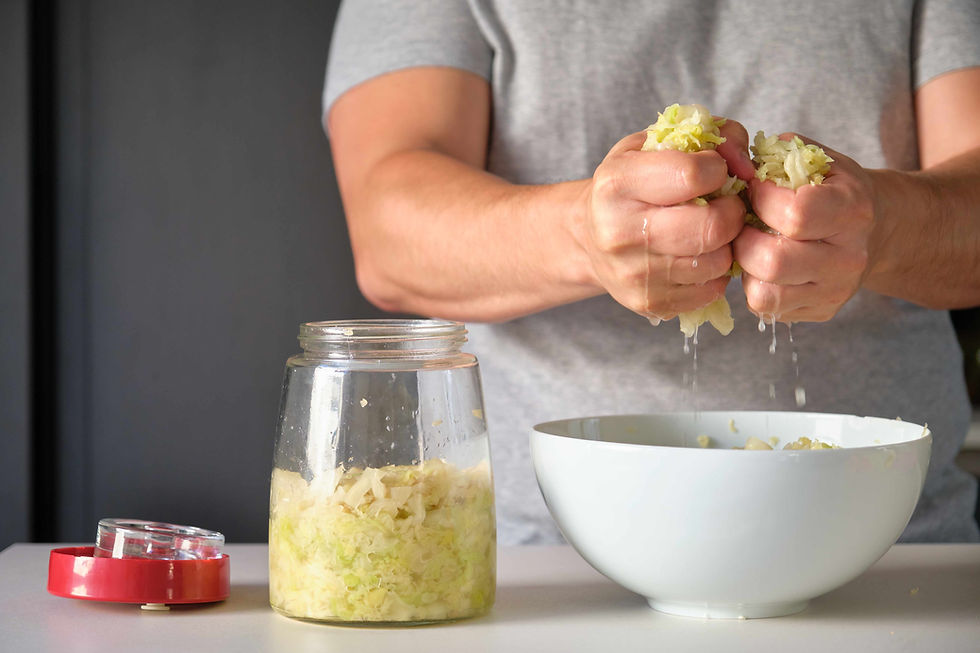
Why is sauerkraut linked with gut health?
There are three main reasons researchers are interested in sauerkraut:
It is a fermented food.
Raw, unpasteurised sauerkraut can contain live microorganisms.
It is made from vegetables and contains dietary fibre.
Those are different properties and shouldn’t be bundled together as one vague “gut health” benefit. Let’s look at each one.
What happens when cabbage becomes sauerkraut?
Sauerkraut is made through lactic acid fermentation. Naturally occurring microorganisms use sugars in the vegetables and produce compounds including organic acids. This creates sauerkraut’s sour flavour and helps preserve it.
The microbial community changes during fermentation, with lactic acid bacteria becoming a major part of the finished ferment.
If the sauerkraut isn’t pasteurised afterwards, viable microorganisms can remain in the food.
That’s why raw sauerkraut is interesting to microbiome researchers.
But eating microorganisms and proving those microorganisms improve your health are two different things.
If you’re new to fermentation, our guide to what sauerkraut is explains this process in more detail.

Does sauerkraut contain probiotics?
It’s more accurate to say that raw, unpasteurised sauerkraut can contain naturally occurring live cultures.
Scientists define probiotics as live microorganisms that provide a demonstrated health benefit when consumed in adequate amounts.
An international scientific consensus on fermented foods makes clear that fermented foods and probiotics aren’t interchangeable terms. For a fermented food to make a probiotic claim, researchers need more information about the microorganisms involved and evidence of a health benefit.
Traditional sauerkraut can contain bacteria from groups that may sound familiar if you’ve looked at probiotic supplements.
For example, researchers have identified Lactiplantibacillus plantarum and Levilactobacillus brevis in sauerkraut. You may also see their older names, Lactobacillus plantarum and Lactobacillus brevis.
Bacteria belonging to these species are also used in some commercial probiotic products.
But this doesn’t make a jar of sauerkraut equivalent to a probiotic supplement.
Probiotic evidence can relate to a defined strain, amount and health outcome. A naturally fermented jar contains a microbial community that can vary.
That’s why at Wild Pantry we talk about naturally occurring live cultures rather than calling our sauerkraut a probiotic product.
What does human research on sauerkraut and gut health actually show?
There are now human studies looking directly at sauerkraut. That’s useful because a lot of online discussion takes research into fermented foods generally and presents it as if sauerkraut itself was tested. Two human studies are particularly useful.
A 2025 study followed 87 healthy adults eating sauerkraut
A crossover intervention trial published in Microbiome in 2025 studied 87 healthy adults.
Participants ate fresh sauerkraut daily for four weeks during different intervention periods.
Researchers used genetic sequencing to examine changes in the gut microbiome.
They found changes in some individual bacterial species after sauerkraut consumption. They didn’t find a broad change in the overall microbiome.
More pronounced changes in individual species were actually seen after pasteurised sauerkraut, and only the pasteurised sauerkraut period increased serum short-chain fatty acids in this study.
That’s an interesting finding because it’s easy to assume raw sauerkraut must always create a bigger microbiome response.
The researchers concluded that the gut microbiome of healthy people appears relatively resilient to short-term dietary changes, though individual bacterial species can be affected.
So we have evidence that eating sauerkraut can interact with aspects of the gut microbiome.

A 2018 trial studied 34 people with IBS
A smaller randomised, double-blind pilot study published in Food & Function followed 34 people with irritable bowel syndrome for six weeks.
One group ate pasteurised sauerkraut.
The other ate unpasteurised sauerkraut.
Both groups experienced reductions in IBS symptom scores.
Researchers also found changes in gut microbiota composition.
Sauerkraut-associated Lactobacillus plantarum and Lactobacillus brevis were detected more often in faecal samples from people eating the unpasteurised sauerkraut.
That’s interesting evidence that microorganisms associated with live sauerkraut can survive passage through at least part of the digestive system and be detected afterwards. But this was a small pilot study.
What about research into fermented foods more widely?
There’s interesting human research into fermented foods more broadly. One of the best-known trials was published in Cell in 2021.
Researchers at Stanford studied 36 healthy adults. Eighteen ate a diet high in fermented foods and 18 followed a high-fibre diet.
The fermented-food group increased its intake of foods including yoghurt, kefir, fermented cottage cheese, kimchi, vegetable brine drinks and kombucha.
Researchers found that microbial diversity increased in the fermented-food group. Several measured inflammatory proteins also decreased.
It’s an interesting result but the fermented-food group contained only 18 people.
We shouldn’t take that finding and claim a forkful of sauerkraut will produce the same changes.
What it does show is why researchers are increasingly interested in diets containing fermented foods.
Do the bacteria in sauerkraut stay in your gut?
Not necessarily. You sometimes hear that eating fermented food will “add good bacteria to your gut”. That’s too simple.
Microorganisms from fermented foods can pass through the gastrointestinal tract and interact with the existing gut microbiota and intestinal environment. But that doesn’t mean they permanently move in. They are however helping create a positive healthy envrioment for your gut to thrive.
Scientific consensus on fermented foods says microorganisms from fermented foods generally aren’t expected to permanently colonise the gut. They can still interact with the gut while passing through.
The 2018 sauerkraut study gives us a useful example. Sauerkraut-associated bacteria were detected more often in faecal samples from people eating unpasteurised sauerkraut.
That shows exposure and passage through the digestive system. It doesn’t prove permanent colonisation.

What does fibre have to do with gut health?
Sauerkraut starts with cabbage and other vegetables, so it also contains dietary fibre. Fibre matters separately from the live cultures. Some types of dietary fibre can be used by microorganisms living in the colon.
This means sauerkraut isn’t interesting solely because it has been fermented. You’re still eating vegetables.
Sauerkraut shouldn’t be treated as your whole fibre strategy.
A varied diet containing vegetables, fruit, wholegrains, pulses, nuts and seeds gives you a much broader range of fibres and plant foods.
Fermented vegetables can form one part of that.
Is raw sauerkraut better for gut health than pasteurised sauerkraut?
We don’t currently have enough evidence to say raw sauerkraut produces better gut-health outcomes than pasteurised sauerkraut.
Raw, unpasteurised sauerkraut does have one clear difference.
Viable microorganisms associated with fermentation can remain in the food. Pasteurisation greatly reduces or inactivates those microorganisms. If consuming live cultures is your reason for choosing sauerkraut, raw and unpasteurised is the relevant type.
There’s still a lot we don’t understand about which parts of fermented foods matter most.
So, is sauerkraut good for your gut microbiome?
The fairest answer is that sauerkraut has several properties that make it interesting for gut health, but human research is still developing.
Research has found:
changes in some bacterial species after people eat sauerkraut
sauerkraut-associated bacteria in faecal samples after people eat unpasteurised sauerkraut
changes in microbiome diversity during a small human trial of a diet high in several fermented foods
changes in gastrointestinal symptoms during a small sauerkraut trial involving people with IBS
Research hasn’t established:
that sauerkraut will “fix” your gut microbiome
that eating sauerkraut guarantees greater microbial diversity
that raw sauerkraut always produces better gut-health outcomes than pasteurised sauerkraut
that sauerkraut treats digestive conditions
that every live microorganism found in sauerkraut qualifies as a probiotic
That’s less dramatic than many of the claims you’ll see online, but it’s closer to what the research actually tells us.
What have we seen after a year of selling sauerkraut?
Scientific research and what customers tell us at a farmers market aren’t the same thing.
We think both are worth talking about, as long as we’re clear about the difference.
We’ve spent more than a year meeting people at farmers markets and food festivals, selling our sauerkraut and Fermented Salsa and talking to people who come back to see us.
We’ve heard from customers who believe adding our ferments to their diets has made a difference to how they feel. Those conversations aren’t clinical trials.
We don’t control what else someone eats, how their lifestyle changes or what other factors might be involved. And we can’t know from an individual story whether sauerkraut caused the change.
But these experiences are part of what we’ve seen while making and selling fermented food.
Here are three examples.

Malcolm and acid reflux
We first met Malcolm at Little Sutton Market in 2025. He told us he struggled with acid reflux, particularly after his main meal and when lying down at night.
After seeing us across two markets, around eight weeks apart, Malcolm told us he’d noticed a gradual improvement in his digestion and was experiencing less reflux at night while eating our sauerkraut.
He said he hadn’t made many other lifestyle changes during that period.
We’re really pleased that Malcolm feels better.
But we can’t say our sauerkraut caused that change, and his experience isn’t evidence that sauerkraut treats acid reflux.
Reflux can have many causes and fermented foods won’t suit everyone. What Malcolm’s story gives us is one person’s experience of introducing fermented vegetables into his diet.
Karen and bowel regularity
Karen told us she’d had very infrequent bowel movements since childhood, at times going around a month between them. She’d previously spoken to her GP about it.
After starting to eat our sauerkraut daily, Karen told us that within around a month she was having bowel movements a couple of times a week and wasn’t experiencing the same bloating after meals. That’s a striking change in her own experience. But again, it’s one person’s story.
We can’t establish from it whether sauerkraut caused the change, which part of the food might have played a role or whether other factors were involved.
It’s the sort of experience that makes us interested in where research into fermented vegetables goes next, rather than proof of what sauerkraut will do for another person.
Alice and bloating
Then there’s an experience much closer to home. Alice didn’t originally start eating sauerkraut because she expected a digestive benefit. She was developing recipes and helping me, Daniel, while I was exploring fermented foods around my own gut health.
At the time, Alice regularly experienced bloating after meals. It had become so normal to her that she barely thought about it.
Around two weeks after regularly eating our ferments, she realised she hadn’t felt bloated for about a week.
What made her notice the contrast more clearly was going away on holiday for two weeks without the ferments she had been eating at home. She noticed the bloating returning. That’s Alice’s experience.
It isn’t evidence that sauerkraut prevents bloating, and we wouldn’t expect everybody to experience the same thing.
But it’s one of the personal experiences that helped build our curiosity around fermented food in the first place.
Why do we share these stories if they aren’t scientific evidence?
Because there’s a useful middle ground between dismissing people’s experiences and treating them as proof. Customer stories can raise interesting questions. Clinical research is how we start answering them properly.
We’ve heard plenty of positive experiences since we began selling fermented food. We also know that the people who return to tell us something changed aren’t a representative sample of everyone who has eaten our products.
Someone who notices no difference is much less likely to seek us out at the next farmers market to tell us.
That’s why we don’t use customer stories to claim our sauerkraut creates a particular health outcome. We listen to them. We share them carefully, and we keep an eye on what properly controlled human research finds.
How should you eat sauerkraut for gut health?
There’s no clinically established amount of sauerkraut everyone needs to eat for gut health but you also don’t need huge portions.
If you’re new to fermented food, we’d rather see you find a way of eating it that fits naturally into your diet.
Start with a forkful alongside something you already eat.
Try it with:
eggs
avocado
sourdough
sandwiches
salads
baked potatoes
grain bowls
roasted vegetables
If you specifically want the live cultures found in raw sauerkraut, eating it without heating it will retain more viable microorganisms.
You can cook your meal and add the sauerkraut afterwards. Our guides to how to eat sauerkraut and how much sauerkraut to eat a day cover both questions in more detail.
What should you look for when buying sauerkraut for gut health?
If live cultures are part of the reason you’re buying sauerkraut, look for a product that is:
naturally fermented
raw
unpasteurised
clearly described as containing live cultures
refrigerated where required
supplied with clear storage instructions
Don’t rely on the word “sauerkraut” alone. Sauerkraut can be fermented and then pasteurised. That doesn’t make it a bad food.
It means you’re buying a different type of fermented food from raw sauerkraut containing viable microorganisms.
Where does Wild Pantry fit into this?
Our own interest in fermentation started with our experiences around food and gut health.
That personal experience is part of why Wild Pantry exists. It isn’t clinical evidence. What we can tell you is how we make our food.
PowerKraut and ImmuniKraut are naturally fermented, raw and unpasteurised.
PowerKraut combines cabbage with beetroot, carrot, turmeric, garlic, red onion, Celtic salt and black pepper. It received a Great Taste Award in 2026.
ImmuniKraut combines organic vegetables including ginger, turmeric, fennel, turnip, carrot, garlic and black pepper.
Both retain the naturally occurring live cultures associated with our fermentation.
After making over four thousands jars in our first year, and spending more than a year talking to people buying fermented food, we’re interested in what the science discovers next.
Sauerkraut doesn’t need exaggerated claims to be interesting.
It’s fermented vegetables containing fibre and, when raw and unpasteurised, a community of naturally occurring live microorganisms. Scientists are still working out exactly what that means for the human gut.

Frequently asked questions
Is sauerkraut good for gut health?
Sauerkraut contains vegetables and fibre and, when raw and unpasteurised, can contain naturally occurring live microorganisms. Human research has found some changes in gut bacteria after sauerkraut consumption, but evidence is still limited. We can’t say eating sauerkraut will improve everyone’s gut microbiome or treat digestive problems.
Does sauerkraut contain probiotics?
Raw sauerkraut can contain live lactic acid bacteria, including species related to bacteria used in some probiotic products. But fermented foods and probiotics aren’t interchangeable. Probiotic claims require evidence for defined microorganisms and a health benefit at an adequate amount. “Naturally occurring live cultures” is more accurate when talking about sauerkraut generally.
Does sauerkraut improve the gut microbiome?
Research suggests sauerkraut can affect some bacterial species in the gut, but that isn’t the same as broadly “improving” the microbiome. A 2025 study involving 87 healthy adults found changes in individual species after four weeks of daily sauerkraut but described the overall microbiome as relatively resilient to the short-term intervention.
Is raw sauerkraut better than pasteurised sauerkraut?
Raw sauerkraut can retain viable microorganisms that pasteurisation greatly reduces or inactivates. Human research hasn’t established that this results in better gut-health outcomes. If your aim is to eat fermented food containing live cultures, raw and unpasteurised sauerkraut is the type to look for.
How much sauerkraut should you eat for gut health?
There isn’t a scientifically established daily amount of sauerkraut for gut health. Human studies have used set amounts for research, but that doesn’t create a recommended serving for everyone. If you’re new to sauerkraut, starting with a small amount alongside food you already eat is a practical approach.
Does cooking sauerkraut kill the live cultures?
Heat can reduce or inactivate the viable microorganisms in raw sauerkraut. If retaining those cultures matters to you, eat the sauerkraut cold or add it after cooking rather than heating it with the meal.
Can sauerkraut treat IBS?
Sauerkraut hasn’t been proven to treat IBS. A small 2018 trial involving 34 people with IBS found reduced symptom scores in groups eating sauerkraut.
Are fermented foods good for the microbiome?
Some human research suggests diets containing fermented foods can affect the gut microbiome. A 2021 trial found increased microbial diversity among 18 people following a high-fermented-food diet. They ate several different fermented foods, so the result can’t be attributed specifically to sauerkraut.
Research and sources
The impact of regular sauerkraut consumption on the human gut microbiota: a crossover intervention trial. Microbiome, 2025Crossover intervention involving 87 healthy adults consuming fresh and pasteurised sauerkraut for four weeks. The study found changes in individual bacterial species but described the overall gut microbiome as relatively resilient to the intervention. -> Microbiome
Lacto-fermented sauerkraut improves symptoms in IBS patients independent of product pasteurisation: a pilot studyFood & Function, 2018Randomised double-blind pilot involving 34 people with IBS. Both groups experienced reduced symptom scores and microbiota changes, but the trial was underpowered and didn’t find a significant difference in symptom improvement between pasteurised and unpasteurised sauerkraut. -> PupMed
Gut-microbiota-targeted diets modulate human immune status. Cell, 2021A 17-week dietary intervention involving 36 healthy adults, with 18 in the high-fermented-food group. Microbial diversity increased in that group, but participants consumed a range of fermented foods rather than sauerkraut alone. -> Cell
The International Scientific Association for Probiotics and Prebiotics consensus statement on fermented foods Nature Reviews Gastroenterology & Hepatology, 2021Expert consensus explaining fermented foods, live microorganisms and why fermented foods shouldn’t automatically be described as probiotics. -> ISAPP


Comments